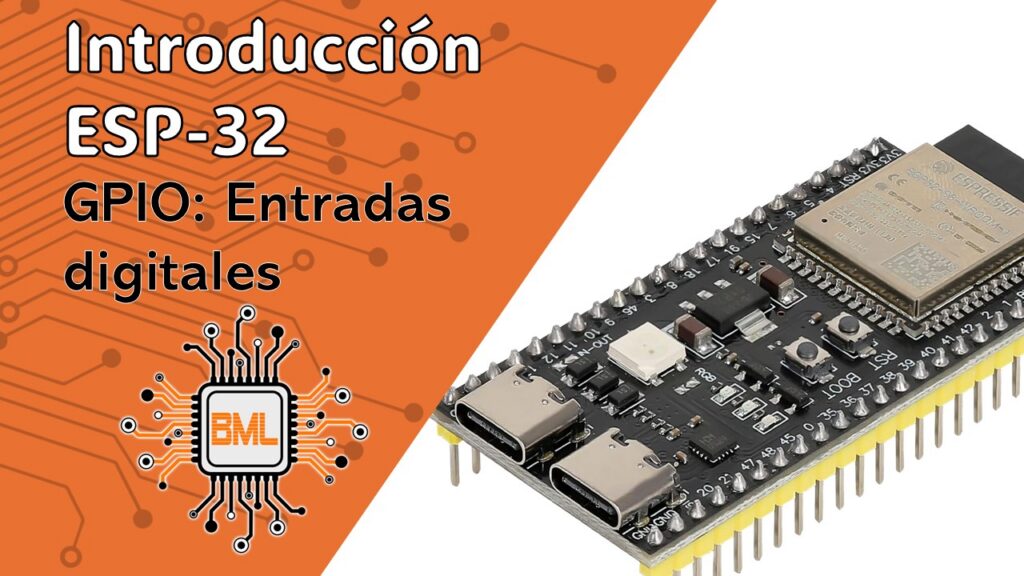
Las entradas digitales son la base de cualquier sistema interactivo con microcontroladores. Entender cómo se interpreta el voltaje, cómo se estabiliza la señal y cómo se evitan lecturas erráticas es clave para diseñar sistemas confiables con ESP32.
Datasheet ESP 32-S3 DevkitC1 v1.1
Código de Arduino IDE:
// ------------------------------
// CONFIGURACIÓN DE PINES
// ------------------------------
const int pinLed = 4;
const int pinBoton = 5;

// ------------------------------
// VARIABLES DE CONTROL
// ------------------------------
bool estadoLed = false;

// Control de evento (evita múltiples toggles)
bool botonProcesado = false;

// Control de tiempo (antirrebote)
unsigned long tiempoInicio = 0;
const int tiempoAntirrebote = 50;

// ------------------------------
// CONFIGURACIÓN INICIAL
// ------------------------------
void setup() {
  pinMode(pinLed, OUTPUT);
  pinMode(pinBoton, INPUT_PULLUP);
}

// ------------------------------
// BUCLE PRINCIPAL
// ------------------------------
void loop() {

  bool lectura = digitalRead(pinBoton);

  // ------------------------------
  // DETECCIÓN DE INICIO DE PULSACIÓN
  // ------------------------------
  if (lectura == LOW && !botonProcesado) {

    // Inicia conteo solo una vez
    if (tiempoInicio == 0) {
      tiempoInicio = millis();
    }

    // ------------------------------
    // VALIDACIÓN DE ESTABILIDAD
    // ------------------------------
    if ((millis() - tiempoInicio) > tiempoAntirrebote) {

      // Verifica si sigue presionado
      if (digitalRead(pinBoton) == LOW) {

        // Evento válido → toggle
        estadoLed = !estadoLed;
        digitalWrite(pinLed, estadoLed);

        // Marca como procesado
        botonProcesado = true;
      }
    }
  }

  // ------------------------------
  // DETECCIÓN DE LIBERACIÓN
  // ------------------------------
  if (lectura == HIGH) {

    // Resetea control para siguiente pulsación
    botonProcesado = false;
    tiempoInicio = 0;
  }
}
Video explicativo: